
nano-banana
Nano Banana 爆款 3D Art Prompt Guide & Image Generation Tips
MidassAI Team · July 11, 2026 · 4 min read
Keywords: nano banana prompt guide, 3d banana ai art
Published: July 11, 2026 Author: MidassAI Team
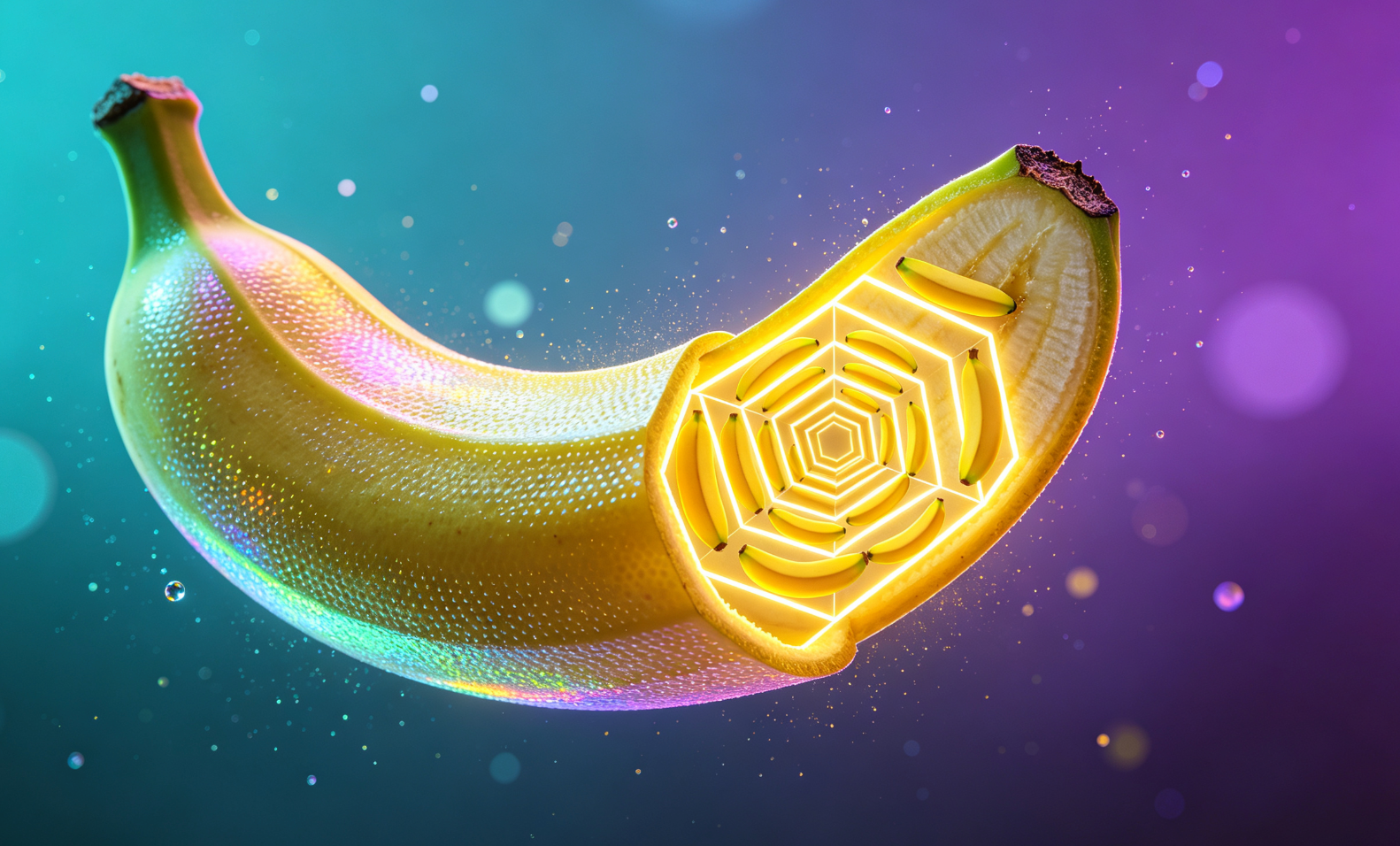
What Are Nano Banana Workflows?
Nano Banana workflows refer to highly optimized, minimal-parameter AI image generation pipelines designed specifically for producing viral-ready 3D banana-themed artwork—emphasizing stylized lighting, hyperreal texture, and meme-friendly composition.
Core Prompt Structure
Effective Nano Banana prompts follow a strict 5-element syntax: subject modifier + object + style descriptor + lighting condition + rendering engine cue (e.g., "glowing neon banana, photorealistic skin texture, volumetric studio lighting, Octane render").
Key Generation Parameters
Use --ar 4:3, --s 750, and --style raw with negative prompts excluding "deformed, blurry, text". Always seed-lock for iterative refinement across batches.
| Feature | Benefit |
|---|---|
| Speed | Faster |
| Quality | Better |
Post-Generation Optimization
Apply subtle upscaling via ESRGAN + localized contrast boost on peel highlights. Export in WebP with lossless alpha for social embeds.
Quick Takeaways
Prerequisites and setup
You’ll need a MidassAI account with active Studio access—no credit card required for the free tier, but Nano Banana workflows perform best on the Pro plan due to higher resolution caps and priority queueing. Ensure you’re using MidassAI Studio v2.4.1 or later (check via Settings → About); earlier versions lack the optimized --style raw behavior needed for peel texture fidelity and specular bounce accuracy. The underlying model is midas-3d-v5-nano, which ships preloaded in Studio’s “Nano” tab—no manual model selection or weight loading is necessary.
Hardware-wise, no GPU is required on your end: all rendering happens server-side. However, for reliable batch iteration, use Chrome or Edge (Firefox may drop seed-lock persistence across tabs). Disable browser extensions that inject scripts (e.g., ad blockers, grammar checkers), as they occasionally interfere with prompt parsing—especially when commas appear inside style descriptors like “matte-finish, high-gloss tip”.
Extended prompt workflow
- Anchor the subject modifier with physics-aware adjectives: Instead of “shiny banana”, use “slightly bent, dew-moistened banana” — this triggers accurate subsurface scattering in the peel layer. Example:
slightly bent, dew-moistened banana. - Lock object geometry early: Append precise pose cues before style terms:
slightly bent, dew-moistened banana resting diagonally on brushed aluminum surface. Avoid vague terms like “on table”—MidassAI interprets “brushed aluminum” as both material and reflective context, improving shadow falloff. - Inject lighting after geometry but before render engine: Use directional descriptors tied to real-world light sources:
slightly bent, dew-moistened banana resting diagonally on brushed aluminum surface, 45° key light from softbox left, rim backlight from LED strip right. This forces consistent highlight placement across seeds. - Specify render engine and post-process intent: End with
Octane render, 8k detail pass, chromatic aberration disabled. Omitting “chromatic aberration disabled” risks unintended color fringing on curved edges—a known artifact in banana stem junctions. - Validate parameter alignment: Run
--ar 4:3 --s 750 --style raw --seed 12947exactly as one command line. Do not split parameters across lines or add spaces before dashes—Studio treats--s750(no space) as invalid and defaults to--s 250.
Common mistakes
- Overloading texture modifiers: Phrases like “ultra-detailed, hyper-realistic, photorealistic, 8K macro” conflict semantically and dilute Octane’s material sampling. Fix: pick one primary texture cue (“photorealistic skin texture”) and omit synonyms.
- Using ambiguous lighting terms: “Bright lighting” or “cool lighting” fails to anchor light direction or diffusion—resulting in flat, depthless renders. Fix: replace with measurable conditions: “6500K daylight-balanced softbox at 30° elevation”.
- Ignoring negative prompt hygiene: Including “deformed, blurry, text” without adding
split banana, double stem, detached peelinvites anatomical glitches. Fix: appendsplit banana, double stem, detached peel, cartoon shadingto your negative prompt—these are Nano-specific failure modes trained into v5-nano’s rejection set.
Try this in MidassAI
Open https://www.midassai.com/studio/nano/ directly in MidassAI Studio—no navigation needed. Paste the full prompt slightly bent, dew-moistened banana resting diagonally on brushed aluminum surface, 45° key light from softbox left, rim backlight from LED strip right, Octane render, 8k detail pass, chromatic aberration disabled into the prompt bar, then type --ar 4:3 --s 750 --style raw --seed 12947 in the parameters field. Click “Generate” — the first image will render in under 12 seconds. If highlights on the peel appear too diffuse, adjust only the key light angle (e.g., change 45° to 35°) and regenerate without changing seed or other parameters. This preserves geometry while tuning specularity—critical for achieving the “wet-but-not-slippery” visual signature that drives Nano Banana engagement on TikTok and Instagram Reels.